• Skip to main content
  • Skip to secondary menu
  • Skip to footer

Opinion.org

#Opinion: opinion matters

  • Sponsored Post
  • About
  • Contact

China: The Fleet That Eats the Sea

September 6, 2025 By Opinion.org Leave a Comment

A cobalt-blue container ship shoulders its way through a calm harbor, “COSCO SHIPPING” stamped across the hull in billboard-white letters that reflect on the water like a wavering marquee. Two tugboats flank it and throw tall fans of spray into the late light, as if staging a nautical procession. The breakwater curls like a stone arm guiding the ship into the channel; red-and-white gantry cranes stand frozen in the foreground, their booms angled like watchtowers above stacked containers in rust, teal, and mustard. Far across the bay, a band of high-rise apartments recedes into heat haze while a small white sailboat cuts the blue, diminished to a pencil stroke by the leviathan’s mass. Everything about the scene announces choreography and control—pilots on the bridge, buoys marking the turns, a hull that moves goods and expectations with clockwork certainty.
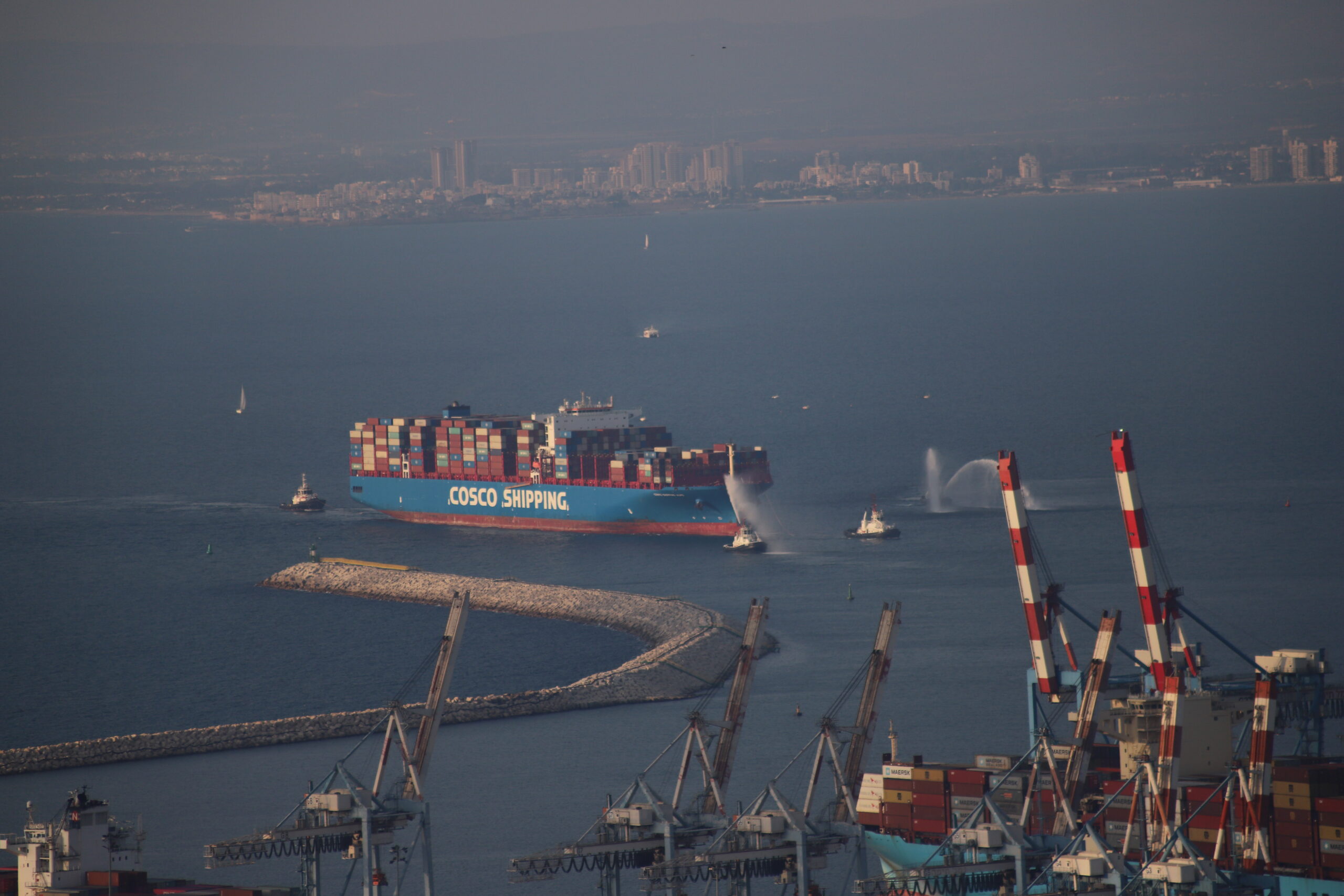
China: The Fleet That Eats the Sea

That image is the polished face of maritime power: documented, insured, trackable, and welcome in most ports. Yet just over the horizon operates a second, shadowed apparatus that has grown even larger in ambition and impact—the world’s most expansive distant-water fishing enterprise, dominated by Chinese capital and tonnage. Where the container ship follows harbor protocols and posts its AIS signal like a lighthouse, thousands of industrial fishing vessels chase squid, tuna, and anything a high-horsepower net will hold, often skating the ragged seams of law. They work the edges of protected zones, crowd up to the line of national jurisdictions, “go dark” by switching off transponders, reflag to masks of convenience, refuel and offload catch at sea, and melt back into the moving anonymity of the high seas. The same country that has perfected the logistics of legitimate trade has also built an extractive machine that thrives on opacity.

Scale turns opacity into strategy. China’s distant-water fleet—subsidized by fuel rebates, tax concessions, and low-cost finance—numbers in the many thousands and projects power from West Africa to the South Pacific and the eastern Pacific’s squid grounds. Ownership is layered through front firms that register locally while control remains offshore; vessels “borrow” identities; corporate webs distance beneficial owners from any criminal exposure. In contested waters, maritime militia units blur the boundary between commerce and coercion, signaling presence for territorial aims while still harvesting the sea. Transshipment hubs and motherships convert the ocean itself into a floating supply chain, erasing the clean line that should separate legal catch from stolen fish.

Inside the steel hulls, the ledger gets darker. Investigations and NGO case files describe a repeating grammar of abuse: passports confiscated, wages withheld, debts inflated, sleep rationed, beatings administered as work discipline, medical care denied until trivial injuries metastasize. Migrant deckhands from Southeast Asia and West Africa sign contracts they cannot read and sail on voyages that stretch months beyond what they were promised. Fisheries observers—those thin blue lines of accountability—report harassment; some have vanished. It bears stating plainly that Chinese crews are not cartoon villains; many are victims of the same coercive system, trapped between predatory recruiters and a labor market that treats human beings as replaceable parts in an industrial machine.

The ecological and economic damage is felt first by coastal communities that never show up on freight manifests. Artisanal boats that once thrived on predictable seasonal runs now find the margins vacuumed by industrial fleets lingering just beyond national limits. Squid and pelagic fish that anchored local economies thin out; bottom trawlers shred benthic habitats and haul up bycatch by the ton; protein security wobbles in places where the sea is the pantry, pay stub, and safety net all at once. This is not a niche conservation story but a structural market distortion: subsidized, mobile armadas externalize their costs onto poorer fishers and weaker states, all while laundering illicit haul into legitimate supply chains that feed wealthy markets.

Fixing this starts with daylight. Continuous, tamper-proof AIS with public access should be a non-negotiable license condition for any vessel working beyond home waters; no signal, no fishing, no port entry. Every flag registry should publish beneficial ownership, not just corporate shells, and regional fisheries bodies must be empowered to board and inspect on the high seas with penalties that actually bite—license suspensions that stick across regions, not paper slaps that invite repeat offenses. Port-state measures need to resemble serious customs work rather than cursory stamping: randomized audits of catch documentation, forensic checks against satellite tracks, and real-time denial of entry for suspect transshipments. Labor rights must be braided into the same fabric—ILO C188 compliance audited by third parties, medical and communications access guaranteed at sea, and an end to the impunity that lets wage theft ride along with illegal fishing.

Markets finish what patrol boats start. Import regimes in the U.S., EU, and other major buyers should require digital traceability from net to plate, with civil and criminal liability for companies that ignore red flags or outsource due diligence to paper mills. Retailers and restaurant groups can demand verifiable provenance the way they demand food-safety compliance; insurers can price risk to make opacity expensive; financiers can deny capital to fleets that will not meet minimum transparency and labor standards. When the profits of invisibility shrink, behavior follows.

Return to the photograph and its quiet geometry. The tugs lean as they arc their water; the ship threads the gap in the breakwater; the cranes wait, patient and tall. The order on display is not accidental—it’s engineered, enforced, and routinized. We can ask the same of the rest of the seascape. Hold two truths at once: that the blue leviathan in the harbor is a lifeline of lawful trade, and that beyond the buoys a darker armada still writes its own rules on the water. If governments, markets, and consumers insist on transparency with the same discipline a harbor pilot uses to clear a narrow channel, the ocean that feeds and steadies half the planet’s coasts has a chance to recover. If we don’t, the fleet that eats the sea will keep growing, and the bill will come due in empty nets, quiet harbors, and lives ground down far from shore.

Filed Under: Opinion

Reader Interactions

Leave a Reply Cancel reply

Your email address will not be published. Required fields are marked *

Footer

Recent Posts

  • The UAE’s OPEC Exit Is a Middle East Realignment, Not an Oil Story
  • Hormuz Is a Message to Beijing and Moscow
  • Ammunition Drain: How the Iran Campaign May Be Weakening Taiwan’s Deterrence
  • Woe to the Vanquished: Iran Still Does Not Get It
  • U.S. Treasury Sanctions 20 Companies and 19 Vessels in Iran-Related Action, Targeting Chinese Refinery
  • Iran Will Sign Anything — And That’s Exactly the Problem
  • The Meme War America Didn’t See Coming
  • Rama Dawaji: A Late Apology and the Question of Timing
  • Ada Shelby on Zohran Mamdani’s Grocery Stores
  • Hochul’s Second Home Tax Is a Press Release, Not a Policy

Media Partners

  • Media Presser
  • k4i.com
  • Policymaker.net
What Is an Analyst Call
China Has Shed $357 Billion in U.S. Treasuries Since 2021
Foreign Debt Holdings Are a Trade Deficit Problem, Not Just a Fiscal One
Foreign Holdings of U.S. Federal Debt Reached $9.2 Trillion in 2025
Japan Holds $1.185 Trillion in U.S. Debt and the Number Tells an Incomplete Story
NAB 2026: Las Vegas and the End of the Broadcast Era
Private Investors Now Dominate Foreign Holdings of U.S. Treasury Debt
The United States Paid $282 Billion in Interest to Foreign Debt Holders in 2025
Why Belgium Holds More U.S. Debt Than Saudi Arabia, and What That Actually Means
Biometric Technologies and Congress: Recent Legislation and Open Questions
Google Trends as an OSINT Tool
New York City's Tax Cliff: What Mamdani's Agenda Gets Wrong
Reform Is No Longer an Insurgency. It's a Realignment.
3,375 Dead in Iran. The IC's Visibility Into What Remains Is the Harder Question.
A Tanker Was Hit in the Strait. Attribution in a Contested Waterway Is Not Simple.
China's Role in the Iran Truce Is Confirmed. What That Means for U.S. Intelligence Is Unresolved.
Gabbard's IC Modernization Push: Largest-Ever Cybersecurity Investment Completes Year One
Gas at $4.45 and Rising. Energy Economics as an Intelligence Signal in the Iran Standoff.
House Intelligence Committee Moves on Counterintelligence Reform as Atkinson Transcripts Are Released
IARPA Launches Five AI Programs Under Accelerated Framework: ARCADE, COSMIC, DECIPHER, LOCUS, MOVES
Film Star Vijay Forms Government in Tamil Nadu: The Celebrity-to-Power Trajectory Completes
The Gulf Realignment Washington Missed
Seven Million and Counting: Britain's Managed Demographic Replacement
UK Taxpayers Are Funding £4 Billion a Year in Student Loans for Foreign Nationals
The Strait of Hormuz and the Limits of Chokepoint Leverage
Sheikh Khaled Goes to Beijing: A Resilience Play Against Iranian Revival
After the Franchises: The Technocratic Turn
The Franchise Model of Neo-Autocracy
The Left Franchise and Its Losing Causes
The Merz Standard: Europe's Preferable Leader Type

Media Partners

  • Press Club US
  • 3V.org
  • ZGM.org
Judge Dismisses Ray Epps Defamation Case Against Fox News a Second Time
The DOJ's Comey Campaign Is Costing It Prosecutors
Iran Sits on UN Boards for Women's Rights, Nonproliferation, and Counterterrorism
Congress Moves to Protect Whales in San Francisco Bay with Save Willy Act
Palantir, DHS, and the Growing Fight Over Immigration Surveillance
Migration and the Limits of European Identity
Industrial Darwinism on the Battlefield: Ukraine’s Drone War Is Forcing a Rethink
Oil Flows Disrupted: Ukraine Strikes Hit Russia’s Baltic Export Arteries
Rubio: If NATO Bars Us From Using Our Own Bases, It's a One-Way Street
The Security Subsidy: Why European Rearmament Remains Stalled
Westin Grand Central, Three Days in May: The 21st Needham Technology, Media & Consumer Conference
Berkshire Hathaway's Annual Meeting Without Warren Buffett
Canelo vs. Benavidez: The Fight Boxing Spent Years Avoiding
Elon Musk's Nvidia Comments and the Market Attention Problem
Generation Z in the Labor Market: What the Data Actually Shows
Harley-Davidson's 2024–2026 Recall and What It Signals
Joel Embiid and the Injury Question That Never Goes Away
Kentucky Derby 2026: What the Result Tells You
Miami Grand Prix 2026 and the American F1 Calculus
Pete Hegseth and the Pentagon's Leadership Vacuum
Two Signals, One Crisis
House Democrats Urge Mike Johnson to Restore Bipartisan Smithsonian Women’s History Museum Bill
Borders, Memory, and the Future of European Identity
Canon R100 Field Notes: Budget Gear, Real Results
Video Rebirth Secures $80 Million to Industrialize AI Video and Build the Next Layer of Digital Reality
A Brief History of Tea: From Ancient Leaves to a Global Ritual
Photography Workshop by Pho.tography.org — Spring Session
S3H.com Announces Groundbreaking Web Dev Service Launch
With Possible Strike Looming, Day Care Workers Deliver Solidarity Petition but Management Nowhere to Be Found
Unleashing the Potential of Domain Market Research

Copyright © 2026 Opinion.org

Media Partners: Market Analysis · Market Research · Referently · Photography · Hormuz · Taiwan Strait · Policy Maker · Publishing House

We use cookies on our website to give you the most relevant experience by remembering your preferences and repeat visits. By clicking “Accept”, you consent to the use of ALL the cookies.
Do not sell my personal information.
Cookie SettingsAccept
Manage consent

Privacy Overview

This website uses cookies to improve your experience while you navigate through the website. Out of these, the cookies that are categorized as necessary are stored on your browser as they are essential for the working of basic functionalities of the website. We also use third-party cookies that help us analyze and understand how you use this website. These cookies will be stored in your browser only with your consent. You also have the option to opt-out of these cookies. But opting out of some of these cookies may affect your browsing experience.
Necessary
Always Enabled
Necessary cookies are absolutely essential for the website to function properly. These cookies ensure basic functionalities and security features of the website, anonymously.
CookieDurationDescription
cookielawinfo-checkbox-analytics11 monthsThis cookie is set by GDPR Cookie Consent plugin. The cookie is used to store the user consent for the cookies in the category "Analytics".
cookielawinfo-checkbox-functional11 monthsThe cookie is set by GDPR cookie consent to record the user consent for the cookies in the category "Functional".
cookielawinfo-checkbox-necessary11 monthsThis cookie is set by GDPR Cookie Consent plugin. The cookies is used to store the user consent for the cookies in the category "Necessary".
cookielawinfo-checkbox-others11 monthsThis cookie is set by GDPR Cookie Consent plugin. The cookie is used to store the user consent for the cookies in the category "Other.
cookielawinfo-checkbox-performance11 monthsThis cookie is set by GDPR Cookie Consent plugin. The cookie is used to store the user consent for the cookies in the category "Performance".
viewed_cookie_policy11 monthsThe cookie is set by the GDPR Cookie Consent plugin and is used to store whether or not user has consented to the use of cookies. It does not store any personal data.
Functional
Functional cookies help to perform certain functionalities like sharing the content of the website on social media platforms, collect feedbacks, and other third-party features.
Performance
Performance cookies are used to understand and analyze the key performance indexes of the website which helps in delivering a better user experience for the visitors.
Analytics
Analytical cookies are used to understand how visitors interact with the website. These cookies help provide information on metrics the number of visitors, bounce rate, traffic source, etc.
Advertisement
Advertisement cookies are used to provide visitors with relevant ads and marketing campaigns. These cookies track visitors across websites and collect information to provide customized ads.
Others
Other uncategorized cookies are those that are being analyzed and have not been classified into a category as yet.
SAVE & ACCEPT